In circuit design and PCB routing, a small resistor is often connected in series on signal lines between ICs. This article analyzes the reasons for this practice from several aspects.
1. Prevent Signal Reflection
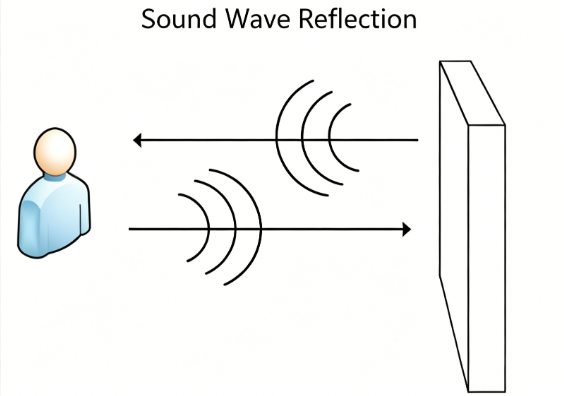
When the voltage on a signal line changes, the signal propagates from the source to the load at a certain speed, which is affected by the length of the signal line, the characteristics of the transmission medium, and circuit parameters. When the signal line length exceeds a certain threshold, signal reflection may occur during transmission.
Signal reflection refers to the phenomenon where part of the signal bounces back due to factors such as resistance and inductance, superimposing with the original signal to cause attenuation, distortion, and other adverse effects on signal transmission.
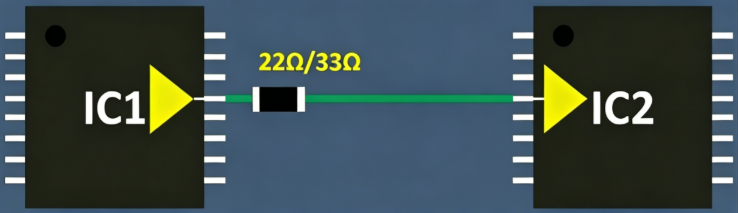
To avoid signal reflection, a small resistor (known as a
terminating resistor) is often connected in series on the signal line. The terminating resistor eliminates reflection through impedance matching, improving signal transmission quality and speed.
2. Suppress Noise
Signal lines in a circuit are susceptible to various noises, including power noise, ground noise, and EMI interference. These noises propagate to other circuit sections via signal lines, causing unstable operation, increased errors, and other issues.
A small series resistor can suppress noise by reducing noise transmission through impedance matching, lowering interference on the signal line.
3. Control Current
Voltage changes on a signal line generate current, which may introduce interference and noise to other circuit parts. A series resistor limits the current magnitude, controlling the impact of the signal line on other circuit components.
4. Prevent Short Circuit
Short circuits may occur when signal lines are connected to other circuits or components, triggering the short-circuit protection mechanism and shutting down the circuit. A series resistor limits current to prevent short circuits and maintain normal circuit operation.
5. Protect ICs
ICs are critical components; their stability and service life directly determine the performance and lifespan of the entire circuit. A series resistor connected at IC pins limits current and voltage on the pins, protecting ICs from overcurrent and overvoltage damage. This extends IC service life and enhances circuit stability and reliability.
In summary, connecting small resistors on signal lines between ICs serves multiple purposes: preventing reflection, suppressing noise, controlling current, preventing short circuits, and protecting ICs. These measures improve circuit stability, reliability, and performance. In practical circuit design, appropriate resistance values and connection methods should be selected based on specific conditions to achieve optimal circuit performance.
About Maxipcb
Maxipcb empowers innovators to turn cutting-edge technologies into reality.
We offer one-stop solutions for design, simulation, testing, PCB manufacturing, component procurement and SMT assembly, enabling efficient development, rapid deployment and risk control across the full product lifecycle.Serving the world in communications, industrial automation, aerospace, automotive, semiconductor and beyond, we build a safer, more connected future together.