PCB Components: Classification, Details and Related Operations
PCB components are the basic units with independent circuit functions that constitute electronic circuits. They are a general term for electronic devices such as capacitors, resistors, and transistors, and also serve as essential elements of small machines and instruments. Commonly used electronic components include resistors, capacitors, potentiometers, switches, etc.; almost all electronic circuits in daily life are composed of these components.
The scope of PCB components is extensive, including resistors, capacitors, inductors, potentiometers, electron tubes, radiators, electromechanical components, connectors, semiconductor discrete devices, electroacoustic devices, laser devices, electronic display devices, optoelectronic devices, sensors, power supplies, switches, micro special motors, electronic transformers, relays, printed circuit boards, integrated circuits, various circuits, piezoelectric devices, crystals, quartz, ceramic magnetic materials, substrate substrates for printed circuits, special materials for electronic functional processes, electronic adhesive (tape) products, electronic chemical materials, and related parts.
In terms of quality, the identification of PCB components has obtained various domestic and foreign certifications to ensure their qualification, such as the European Union's CE certification, the United States' UL certification, Germany's VDE and TUV certifications, and China's CQC certification.
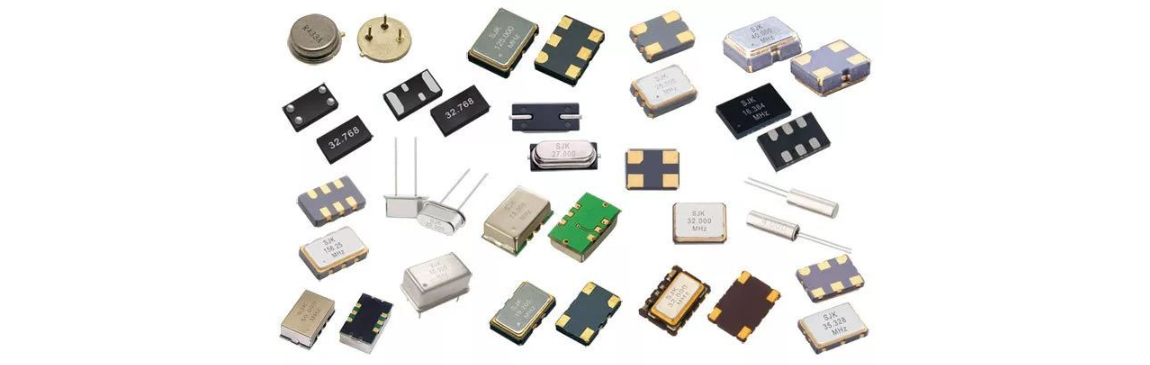
What are the components of a circuit board?
1. Classification of PCB Components
PCB components can be mainly divided into active components and passive components, with clear differences in functional characteristics and working principles:
1.1 Active Components
Active components refer to components that require an external power supply to provide energy to realize their specific functions (and some have built-in power supplies). When powered, they can perform active functions such as stimulating and amplifying electrical signals, oscillating, controlling current or energy distribution, and even data operation and processing.
Common active components include: chips (IC), memory chips (memory), discrete elements, various types of transistors, electron tubes, image tubes, displays, etc.
In addition, active components can be subdivided into discrete elements and integrated circuits (relative concepts):
-
Discrete elements: Refers to single independent electronic components (such as individual resistors, capacitors, inductors), which have a single function and exist as the smallest independent unit.
-
Integrated circuits (IC): Connect discrete elements and wiring together through a special process to form a combined electronic component with more complex functions.
1.2 Passive Components
Passive components are relative to active components. They do not require an external power supply to realize their own functions; they only need signals to pass through the circuit to complete their functions. They respond passively to electrical signals and cannot perform functions such as excitation, amplification, or oscillation.
Common passive components include capacitors, resistors, inductors, relays, oscillators, sensors, rectifier bridges, optocouplers, connectors, fuses, diodes, transistors, wafers, etc.
Passive components can be further subdivided into circuit components and connection components:
-
Circuit components: Such as resistors, capacitors, inductors, transformers, relays, switches, etc., which are responsible for realizing core circuit functions.
-
Connection components: Such as connectors, sockets, connecting cables, and printed circuit boards, which are used to connect various circuit components to form a complete circuit structure.
2. Detailed Introduction to Common PCB Components
-
Chip (IC): The English abbreviation is IC, also known as an integrated circuit. It is a device with a specific function formed by integrating transistors, resistors, capacitors, and other elements on a silicon substrate using a special process.
-
Capacitor: Composed of two metal films close together and separated by an insulating material. Its main characteristic is to block direct current and pass alternating current. In circuits, it is generally denoted by "C" plus a number (e.g., C21 represents the capacitor numbered 21).
-
Resistor: Its main functions on PCB include shunting, current limiting, voltage division, biasing, etc. In circuits, it is generally denoted by "R" plus a number (e.g., R2 represents the resistor numbered 2).
-
Inductor: An energy storage element that can convert electrical energy into magnetic field energy and store it, and can block changes in current. Its working principle is similar to that of a transformer. It is often used with capacitors to form LC filters, LC oscillators, etc. It is commonly denoted by the symbol "L", with the basic unit being Henry (H) and millihenry (mH) as the commonly used unit.
-
Relay: An electrical control device, essentially an "automatic switch" that uses a small current to control the operation of a large current. It plays roles in automatic adjustment, safety protection, and circuit conversion in circuits.
-
Oscillator: An electronic component used to generate repetitive electronic signals (usually sine waves or square waves). It is an energy conversion device that can convert direct current into an alternating current signal of a certain frequency, and the circuit formed by it is called an oscillating circuit.
-
Sensor: A detection device that can convert measured information into electrical signals or other required forms of information output, to meet the needs of information transmission, processing, storage, display, recording, and control. According to its basic sensing function, it is usually divided into ten categories: heat-sensitive components, photosensitive components, gas-sensitive elements, force-sensitive components, magnetic sensitive components, humidity sensitive components, acoustic components, radiation-sensitive components, color-sensitive components, and taste sensitive components.
-
Rectifier Bridge: A device that encloses rectifier tubes in a shell, completes rectification through the unidirectional conductivity principle of diodes, and converts alternating current into direct current.
-
Optocoupler: Transmits electrical signals through light as a medium, has a good isolation effect on input and output electrical signals, and is widely used in digital circuits.
-
Connector: Generally refers to electrical connectors, a device that connects two active devices to transmit current or signals (e.g., common sockets).
-
Wafer: Mainly composed of arsenic (As), aluminum (Al), gallium (Ga), indium (In), phosphorus (P), nitrogen (N), and strontium (Sr). It is the light-emitting component of LEDs and the core part of LEDs.
-
Diode: Has unidirectional conductivity, mainly used in rectifier circuits, detection circuits, voltage stabilizing circuits, etc., with a wide range of applications.
-
Triode (Transistor): Has three pins, hence the name. It has a current amplification function and is widely used in switch control, signal amplification, etc.

3. Soldering of PCB Components
Soldering PCB components (especially SMD components) generally follows the process: fixing PCB components → soldering PCB components → cleaning PCB.
Manual soldering steps for SMD components:
-
Clean and fix the PCB;
-
Fix the SMD components on the PCB;
-
Apply solder to one pin for components with few pins;
-
Perform fixed soldering for components with few pins;
-
Solder the remaining pins;
-
Use drag soldering for SMD chips with many pins;
-
Remove excess solder;
-
Clean the soldered area on the PCB.
With the increasing miniaturization and precision of PCBs and PCB components, manual soldering has become more and more difficult, and even impossible in some cases. Therefore, professional PCB component soldering manufacturers are required to complete this work. MaxiPCB is equipped with advanced electronic circuit board component soldering and SMT equipment, providing customers with professional PCB component soldering services.
4. Sourcing of PCB Components
MaxiPCB has a professional PCB component sourcing team, providing customers with one-stop services from electronic component sourcing to assembly, ensuring the quality and efficiency of component supply and assembly.

