Copper pouring is a commonly used technology in printed circuit board (PCB) manufacturing. The choice between grid copper pour and solid copper pour depends on specific application requirements. This article provides a comparative analysis of these two copper pouring methods.
Copper pouring is a commonly used technology in printed circuit board (PCB) manufacturing. The choice between grid copper pour and solid copper pour depends on specific application requirements. This article provides a comparative analysis of these two copper pouring methods.
Grid Copper Pour
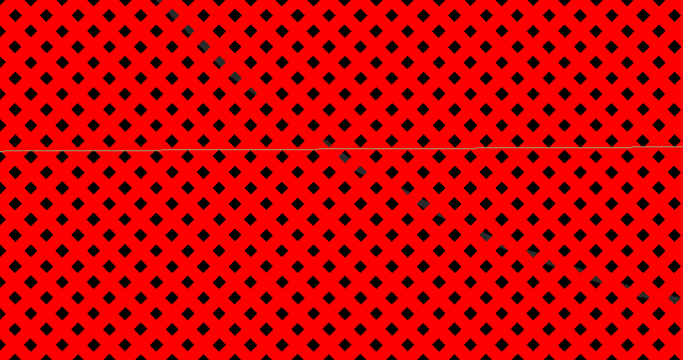
Grid copper pour refers to the formation of a grid-shaped copper cladding layer on a circuit board. This copper pouring method offers the following advantages:
- Excellent heat dissipation performance
Grid copper pour provides effective heat dissipation, making it particularly suitable for high-power circuit boards. The grid structure facilitates air circulation and effectively reduces the temperature of the circuit board.
- Reduced copper consumption
Compared with solid copper pour, grid copper pour uses less copper during manufacturing, which lowers costs and reduces environmental impact.
- Reduced electromagnetic interference
Grid copper pour can effectively shield electromagnetic interference (EMI) and improve the anti-interference capability of the circuit board.
However, grid copper pour also has the following disadvantages:
- Current concentration
Due to the uneven distribution of the copper layer in grid copper pour, current tends to concentrate significantly between grid lines, which may lead to excessively high current density and increase the risk of circuit failure.
- Difficult maintenance
The complex structure of grid copper pour makes maintenance and repair relatively difficult.
Solid Copper Pour
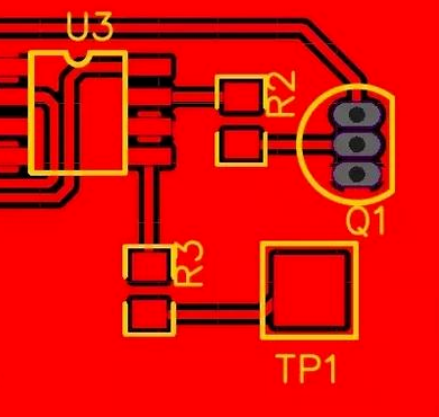
Solid copper pour refers to the formation of a continuous copper cladding layer on the entire surface of a circuit board. This copper pouring method offers the following advantages:
- Uniform current distribution
Solid copper pour ensures even current distribution across the entire circuit board, reduces the problem of excessive current density, and improves circuit reliability.
- Easy maintenance
Solid copper pour features a simple structure, making maintenance and repair relatively easy.
- Suitable for high-frequency signals
Solid copper pour provides low loss and excellent signal integrity in high-frequency signal transmission.
However, solid copper pour also has the following disadvantages:
- Poor heat dissipation performance
Compared with grid copper pour, solid copper pour has inferior heat dissipation. It may not be ideal for high-power circuit boards or applications requiring high heat dissipation.
- High copper consumption
Solid copper pour requires a large amount of copper material, which increases costs.
Comparative Analysis
Grid copper pour and solid copper pour each have their own advantages and limitations. A comparative analysis of the two methods in different aspects is as follows:
- Heat dissipation performance
Grid copper pour has a distinct advantage in heat dissipation. The grid structure enables better air circulation, thereby enhancing heat dissipation. Grid copper pour is a better choice especially for high-power circuit boards or applications requiring excellent heat dissipation. In contrast, solid copper pour has relatively poor heat dissipation performance.
- Current distribution
Solid copper pour performs better in current distribution. It ensures uniform current distribution across the circuit board, reduces the risk of excessive current density, and helps improve circuit reliability. Due to the grid structure, current concentrates significantly between grid lines in grid copper pour, which may cause excessive current density and increase the risk of circuit failure.
- Material cost
Grid copper pour is more advantageous in material cost than solid copper pour. It uses less copper, reducing manufacturing costs and environmental impact. Solid copper pour requires more copper material, leading to higher costs.
- Electromagnetic interference
Grid copper pour performs better in suppressing electromagnetic interference. The grid structure can effectively shield EMI and improve the anti-interference capability of the circuit board. Solid copper pour is relatively weak in terms of electromagnetic interference suppression.
Summary
Grid copper pour is suitable for high-power circuit boards or applications with high heat dissipation requirements. It features excellent heat dissipation and anti-interference capabilities but has limitations in current distribution.
Solid copper pour is suitable for scenarios requiring high uniformity of current distribution, with good signal integrity and easy maintenance.
The selection of a copper pouring method should be based on a comprehensive trade-off of various factors according to specific application requirements.
About Maxipcb
Maxipcb empowers innovators to turn cutting-edge technologies into reality.
We offer one-stop solutions for design, simulation, testing, PCB manufacturing, component procurement and SMT assembly, enabling efficient development, rapid deployment and risk control across the full product lifecycle.Serving the world in communications, industrial automation, aerospace, automotive, semiconductor and beyond, we build a safer, more connected future together.