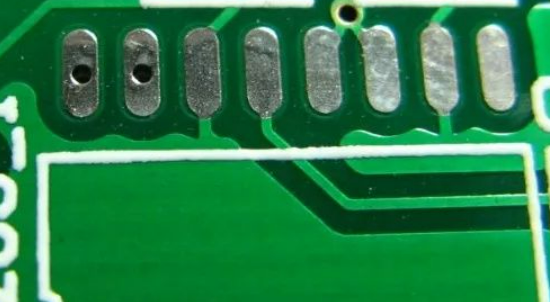
During the use of circuit boards, pad peeling often occurs, especially during circuit board rework. When using an electric soldering iron, pad peeling is very likely to occur. How should PCB manufacturers respond? This article analyzes the causes of pad peeling.
During the use of circuit boards, pad peeling often occurs, especially during circuit board rework. When using an electric soldering iron, pad peeling is very likely to occur. How should PCB manufacturers respond? This article analyzes the causes of pad peeling.
1. Substrate Quality Issues
Due to the relatively poor adhesive force of the resin glue between the copper foil and epoxy resin of the copper-clad laminate, even the copper foil of a circuit board with a large area of copper foil is very easy to separate from the epoxy resin when slightly heated or under mechanical external force, leading to problems such as pad peeling or copper foil peeling.
2. Impact of Circuit Board Storage Conditions
Affected by the weather or stored in a humid place for a long time, the circuit board absorbs moisture and contains too much water. To achieve the ideal welding effect, the heat taken away by the volatilization of water must be compensated during SMT soldering, so the welding temperature and time need to be extended. Such welding conditions are likely to cause delamination between the copper foil and epoxy resin of the circuit board. Therefore, PCB manufacturers should pay attention to the environmental humidity when storing circuit boards.
3. Electric Soldering Iron Welding Issues
Generally, the adhesive force of the circuit board can meet the requirements of ordinary welding, and pad peeling will not occur. However, electronic products may generally need rework, which is usually repaired by electric soldering iron welding. Due to the local high temperature of the electric soldering iron often reaching 300-400℃, the local instantaneous temperature of the pad is too high, causing the resin under the welded copper foil to peel off due to high temperature, resulting in pad peeling. When disassembling with an electric soldering iron, it is also easy to bring the physical force of the soldering iron tip on the pad, which is also a cause of pad peeling.
About Maxipcb
Maxipcb empowers innovators to turn cutting-edge technologies into reality.
We offer one-stop solutions for design, simulation, testing, PCB manufacturing, component procurement and SMT assembly, enabling efficient development, rapid deployment and risk control across the full product lifecycle.Serving the world in communications, industrial automation, aerospace, automotive, semiconductor and beyond, we build a safer, more connected future together.