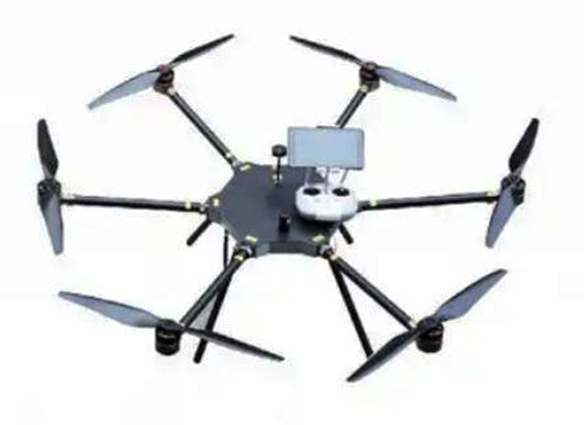
• Drone antenna
  • Drone antenna

Drone antenna

Product Model: Drone Antenna PCB
Material: Teflon / Ceramic / FR-4
Quality Standard: IPC-6012
Dielectric Constant: 2.0–16
Layer Count: 1–34 layers
Board Thickness: 0.254mm–6.0mm

  • Drone antenna
  • Description

  • Data Sheet

1. Overview of Drone Antennas

Drone antennas are core components of unmanned aerial vehicles (UAVs), responsible for transmitting and receiving radio waves to enable communication between UAVs and remote controllers, peripheral devices, and backend systems. They are the key enablers for fundamental UAV functions including navigation positioning, data transmission, and onboard system operation, and their performance directly determines the operational stability, communication reliability, and functional utility of UAVs.

2. Definition and Core Functions of Drone Antennas

In essence, a drone antenna is an electromagnetic wave transceiving device integrated into the UAV system, which utilizes the radiation and reception characteristics of electromagnetic waves to establish communication links between the UAV and ground control stations, satellites, or other UAVs. The design of drone antennas must strictly consider key performance parameters such as operating frequency, signal gain, directivity, and polarization mode to ensure stable, efficient, and low-loss signal transmission.
During actual flight operations, drone antennas must withstand complex and variable environmental conditions, including strong wind loads, extreme temperature fluctuations, and electromagnetic interference (EMI). Therefore, they are required to have excellent wind resistance, wide temperature adaptability, and reliable electromagnetic compatibility to maintain stable performance throughout the flight cycle.

3. Classification of Drone Antennas

Drone antennas are classified into multiple types based on their structural design and functional characteristics, each adapted to specific UAV application scenarios. The main classifications are as follows:

3.1 Omnidirectional Antenna

Omnidirectional antennas radiate electromagnetic waves uniformly in all horizontal and vertical directions, featuring wide coverage and no directional restrictions. They are particularly suitable for low-altitude UAV flight monitoring, short-range communication, and scenarios where the UAV’s flight direction is variable, as they can maintain stable signal reception and transmission without directional alignment.

3.2 Directional Antenna

Compared with omnidirectional antennas, directional antennas concentrate electromagnetic wave radiation in a specific direction, which effectively improves signal gain and reduces interference from irrelevant directions. They are ideal for long-range UAV communication, satellite communication for long-endurance UAVs, and scenarios requiring directional signal enhancement, as they can transmit signals over longer distances with higher signal-to-noise ratios.

3.3 Microstrip Antennas

Microstrip antennas, also known as patch antennas, have become the preferred choice for modern drone antenna design due to their compact structure, lightweight, low profile, and easy integration with UAV airframes. They are typically fabricated on a dielectric substrate with a metal patch and ground plane, making them suitable for small and micro UAVs that require lightweight and high-performance communication components, effectively balancing the dual requirements of UAV payload capacity and communication performance.

3.4 Phased Array Antennas

Phased array antennas consist of an array of multiple antenna elements, and their beam direction and coverage can be dynamically adjusted by electronically controlling the phase and amplitude of each element. This type of antenna offers high flexibility, fast beam scanning speed, and strong adaptability, and is a core component for advanced UAV functions such as autonomous navigation, real-time obstacle avoidance, precision targeting, and multi-target communication.

4. Technical Characteristics of Drone Antennas

The design of drone antennas must be comprehensively coordinated with the UAV’s flight environment, payload capacity, and communication requirements, resulting in the following typical technical characteristics:
  • Wideband Design: To adapt to diverse communication systems (such as remote control, navigation, and data transmission), drone antennas must cover multiple operating frequency bands, ensuring compatibility with different communication protocols and signal types.
  • High-Efficiency Gain: Through optimized structural design and high-performance material selection, the signal gain of the antenna is improved, enhancing the long-distance signal transmission capability and anti-interference performance.
  • Miniaturization and Lightweight: Due to the limited payload capacity of UAVs, antennas must be designed with minimized size and weight to reduce aerodynamic drag and avoid affecting the UAV’s flight performance.
  • High Stability and Reliability: In complex flight environments (such as strong wind, high temperature, low temperature, and electromagnetic interference), the antenna must maintain stable electrical performance and structural integrity to ensure uninterrupted communication.


5. Selection Guidelines for Drone Antennas

The selection of drone antennas must be based on the UAV’s specific application scenarios and operational requirements. Key selection factors to consider are as follows:

5.1 Operating Frequency

First, determine the UAV’s operating frequency range. Most civilian and commercial UAVs use the 2.4 GHz or 5.8 GHz ISM bands; industrial-grade UAVs may involve other dedicated frequency bands. The selected antenna must be fully compatible with the UAV’s transmitter and receiver frequency to ensure effective signal matching.

5.2 Antenna Type

Select the appropriate antenna type according to the application scenario: Omnidirectional antennas are suitable for general flight, FPV (First Person View) operations, and short-range communication, as they provide 360° signal coverage without directional alignment. Directional antennas are suitable for long-distance flight, cross-obstacle communication, and scenarios requiring high signal concentration, as they offer longer transmission range and better signal penetration.

5.3 Signal Gain

Antenna gain refers to the ability to concentrate electromagnetic waves in a specific direction. High-gain antennas have a narrower beamwidth but can transmit signals over longer distances with stronger penetration; low-gain antennas have a wider beamwidth but shorter transmission range. The selection should be based on the UAV’s flight distance, coverage requirements, and flying style.

5.4 Polarization Mode

Drone antennas are divided into linearly polarized (vertical or horizontal) and circularly polarized types. It is crucial to match the polarization mode of the drone’s transmitter and receiver antennas to ensure optimal signal strength. Circularly polarized antennas are widely used in FPV applications and complex flight environments, as they can effectively resist signal loss caused by UAV attitude changes (such as rotation and tilt).

5.5 Connector Type

Ensure the selected antenna is equipped with the correct connector type to match the UAV’s transmitter, receiver, or onboard communication module. Common connector types for drone antennas include N-type, SMA/RP-SMA, IPEX, and MCX, which vary according to the UAV’s size and communication module specifications.

6. Future Development Trends of Drone Antennas

6.1 High Integration

With the continuous advancement of UAV technology, drone antenna systems will develop towards higher integration. Antennas will be more closely integrated with the UAV airframe, adopting conformal design to reduce aerodynamic drag, save payload space, and improve the overall flight efficiency of the UAV.

6.2 Spectrum Sharing and Cognitive Radio

Future drone antennas will be equipped with stronger spectrum awareness and adaptive adjustment capabilities, adopting cognitive radio technology to intelligently detect and select the optimal frequency band for communication. This will effectively alleviate the shortage of spectrum resources and improve the anti-interference ability of UAV communication in complex electromagnetic environments.

6.3 Green Communications

Driven by the increasing emphasis on environmental protection, drone antenna development will focus on low energy consumption and low environmental impact. Through efficient energy management strategies, optimized circuit design, and eco-friendly material selection, the energy consumption of antenna systems will be reduced, realizing green and sustainable communication.
Drone antenna technology is constantly evolving, with high integration, intelligent spectrum utilization, and green communications as the core development trends. As UAV application scenarios continue to expand (such as aerial surveying, emergency rescue, and smart agriculture), these technological advancements will provide stronger support for the in-depth integration of UAVs in various industries, promoting the high-quality development of the UAV industry.

Product Name: Drone Antenna

Material: Teflon/Ceramic / FR-4

Quality standard: IPC-6012

Dielectric constant: 2.0-16

Layers: 1 Layer - 34 layer

Thickness: 0.254mm - 6.0mm

Copper thickness: H/H-30Z

Surface technology: Silver(Can choose Gold or OSP)

Application: Aeral photography, agrcutural crop protection,logistics delveny, sunveying and maping,power ine inspection,forest fre monitoning, insect radardetecion, emergency rescue operations, and other felds.