In pcb design, we often wonder whether the surface of pcb should be covered with copper. This actually depends on the situation. First of all, we need to understand the advantages and disadvantages of copper coating on the surface.
In pcb design, we often wonder whether the surface of pcb should be covered with copper. This actually depends on the situation. First of all, we need to understand the advantages and disadvantages of copper coating on the surface.
First of all, let's look at the benefits of copper plating on the surface1. The copper coating on the surface can provide additional shielding protection and noise suppression for the inner signal;
2. It can improve a heat dissipation capacity of pcb.
3. In the process of PCB production, the consumption of corrosive agent is saved;
4. Avoid PCB warping and deformation caused by different stresses during PCB reflow soldering due to unbalanced copper foil.
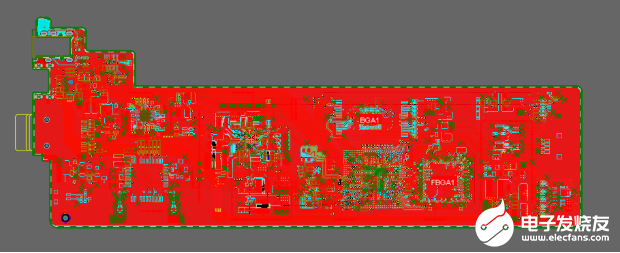 And the corresponding copper plating on the surface also has corresponding disadvantages:
1. The copper-clad plane of the outer layer is bound to be fragmented by the components and signal lines of the surface layer. If there is a copper foil with poor grounding (especially the thin and long broken copper), it will become an antenna and cause EMI problems;
For this kind of copper skin, we can also dig it out through the functions in the software.
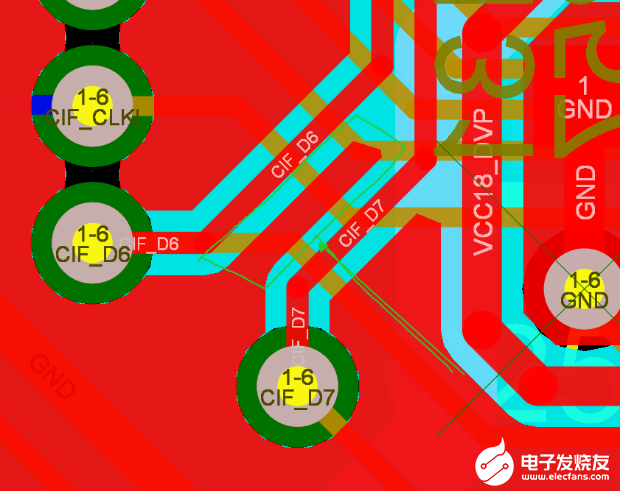
2. If the pins of components are fully connected with copper, the heat will be dissipated too quickly, which will make it difficult to disassemble and repair the welding. Therefore, we usually use the copper laying method of cross connection for patch components.
Therefore, the analysis of whether the surface is coated with copper has the following conclusions:1. PCB design For a two-layer board, it is necessary to cover it with copper. Generally, the floor will be paved with the bottom layer, and the main components and power and signal wires will be placed on the top layer.
2. For high impedance circuits and analog circuits (analog-to-digital conversion circuits and switching mode power conversion circuits), copper cladding is a good practice.
3. For multilayer high-speed digital circuits with complete power supply and ground plane, please note that this refers to high-speed digital circuits, and it will not bring great benefits to cover the outer layer with copper.
4. For digital circuits with multi-layer boards, the inner layer has a complete power supply and ground plane, and the copper coating on the surface layer can not significantly reduce the crosstalk. On the contrary, the copper coating that is too close will change the impedance of microstrip transmission lines, and the discontinuous copper coating will also have a negative impact on the transmission lines.
5. For the multilayer board, the distance between the microstrip line and the reference plane is less than 10mil, and the return path of the signal will directly choose the reference plane below the signal line instead of the copper skin around it, because its impedance is lower. For a double-layer board with a distance of 60mil between the signal line and the reference plane, the noise can be significantly reduced by wrapping a complete copper skin along the whole signal line path.
6. For multilayer boards, if there are many surface devices and traces, don't apply copper to avoid excessive broken copper. If there are few surface components and high-speed signals, and the board is relatively empty, you can choose to lay copper on the surface for the requirements of PCB processing technology, but pay attention to the distance between the copper skin and the high-speed signal line at least 4W in PCB design to avoid changing the characteristic impedance of the signal line.
About Maxipcb
Maxipcb empowers innovators to turn cutting-edge technologies into reality.
We offer one-stop solutions for design, simulation, testing, PCB manufacturing, component procurement and SMT assembly, enabling efficient development, rapid deployment and risk control across the full product lifecycle.Serving the world in communications, industrial automation, aerospace, automotive, semiconductor and beyond, we build a safer, more connected future together. 
