Compared with common troubles like cost pressure, tight deadlines, strict quality requirements, and delayed payments, the minor design errors and small bugs in orders are far more troublesome!
I recently interviewed several senior SMT engineers, and all of them poured out their frustrations. They agreed that:
Compared with common troubles like cost pressure, tight deadlines, strict quality requirements, and delayed payments, the
minor design errors and small bugs in orders are far more troublesome!
Today, let’s take a look at these design issues that affect production schedules, so you can avoid potential production risks in advance.
Case 01
Engineer Li, with 10 years of SMT experience, complained:
What I fear most is small bugs in customers’ design files!
Once, the BOM clearly listed a 0402 small resistor, but the corresponding PCB pad was for 1206. How could they match?
Although the component cost was only 15 yuan per reel, we had to rush purchase from Huaqiangbei with a 150-yuan delivery fee.
Meanwhile, the SMT line was waiting idle, with a downtime cost of at least 400–500 yuan per hour.
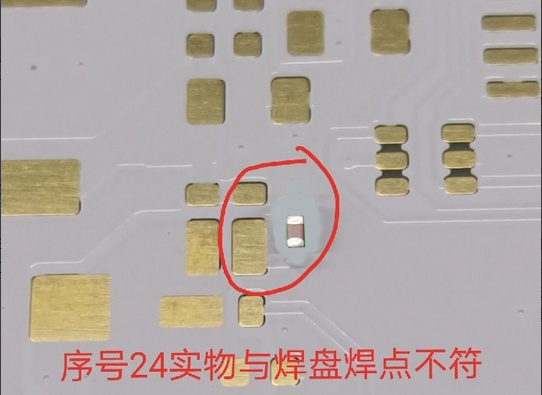
BOM and PCB pad mismatch example]
Case 02
Engineer Zhang, with years of experience, shared similar feelings:
I have also encountered
mismatches between BOM and PCB pads.
For example, the BOM specified a 0603 inductor, but the PCB pad was designed for 0630.
This might be just a typo when building the BOM, but the physical size differs by double, causing considerable trouble for production.
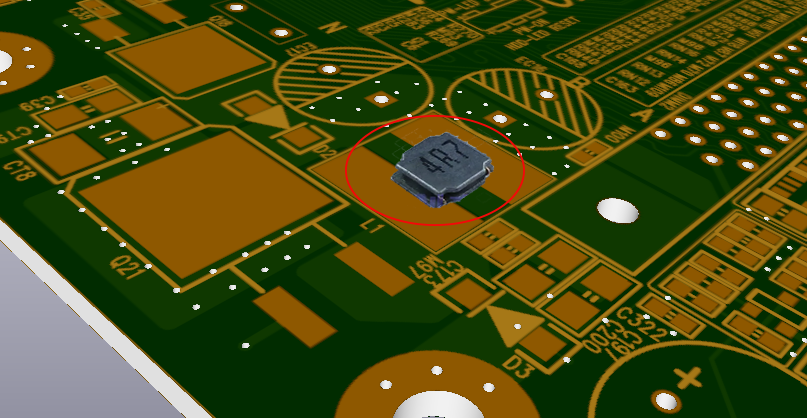
Inductor package and pad mismatch]
Case 03
Engineer Wang, who has worked in a large factory for more than 10 years, sighed:
The most annoying issue is
mismatch between through‑hole components and PCB hole diameters.
For instance, a component pin with 1 mm diameter was forced into a 0.8 mm PCB hole.
Every time this happens, we, the PCB factory, and the component supplier get stuck in awkward three‑party confirmation with mutual blame. The board factory says the holes are fine, the supplier says the components are okay, and we are caught in the middle.
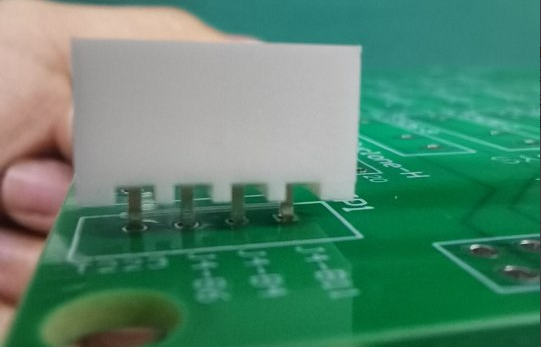
Through‑hole pin and PCB hole size mismatch]
Case 04
The problems shared above are just the tip of the iceberg in the SMT industry. Other issues, such as connector plastic parts intended for wave soldering but unable to withstand high temperatures, leading to blistering and deformation, also trouble SMT engineers frequently.
Even more frustrating is that some customers request design changes after the boards are produced, such as adding jumper wires or replacing capacitors, which undoubtedly increases production complexity and cost!
Some customers rush products to market without sufficient trial production and verification; some even skip prototyping and go straight to mass production… This leads to a flood of abnormalities emerging at the SMT stage.
As a contract manufacturer, we feel helpless but must prioritize customers. We have to “overcome production challenges” and solve these issues within limited time and cost to ensure smooth production.
After all, most of these problems are caused by designer mistakes. Without these small bugs, production would run smoothly. Eliminating bugs in design files before production can reduce risks, avoid unnecessary downtime, and save labor costs.
Of course, even with tool‑assisted inspection,
trial production and verification are essential from R&D to mass production. This is not only responsible for your own products but also respect and support for SMT peers.
About Maxipcb
Maxipcb empowers innovators to turn cutting-edge technologies into reality.
We offer one-stop solutions for design, simulation, testing, PCB manufacturing, component procurement and SMT assembly, enabling efficient development, rapid deployment and risk control across the full product lifecycle.Serving the world in communications, industrial automation, aerospace, automotive, semiconductor and beyond, we build a safer, more connected future together.

