With technological development, PCBs play a vital role in various end products. Fierce market competition has raised higher requirements for PCB reliability. A reliable circuit board requires a strict design process. For critical circuits, the first step is to verify components and quality through multiple reliability tests.
With technological development, PCBs play a vital role in various end products. Fierce market competition has raised higher requirements for PCB reliability. A reliable circuit board requires a strict design process. For critical circuits, the first step is to verify components and quality through multiple reliability tests.
1. Ionic Contamination Test
Purpose: Measure the ion content on the PCB surface to verify cleanliness.
Method: Clean the sample surface with 75% propanol. Ions dissolve into propanol and change its conductivity. Record the conductivity change to calculate ion concentration.
Standard: ≤6.45 μg NaCl/sq.in
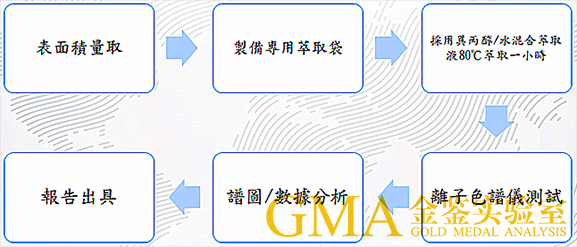
Ionic contamination test setup and principle diagram
2. Solder Mask Chemical Resistance Test
Purpose: Evaluate the chemical resistance of the solder mask.
Method: Apply quantitative dichloromethane onto the sample surface. After a period, wipe with white cotton. Check for cotton staining and solder mask dissolution.
Standard: No staining or dissolution observed.
3. Solder Mask Hardness Test
Purpose: Test the hardness of the solder mask.
Method: Place the board on a flat surface. Scratch with standard hardness pencils until no scratch is visible. Record the minimum pencil hardness.
Standard: Minimum hardness ≥ 6H.
4. Peel Strength Test
Purpose: Measure the force required to peel copper traces from the substrate.
Equipment: Peel strength tester
Method: Peel the copper trace at least 10 mm from one side of the substrate. Mount the sample on the tester. Apply vertical force to peel the remaining trace and record the force value.
Standard: Force > 1.1 N/mm.
5. Solderability Test
Purpose: Verify the solderability of pads and plated through-holes (PTHs).
Equipment: Solder machine, oven, timer
Method:
- Bake the board at 105℃ for 1 hour.
- Apply flux.
- Immerse the board vertically into the solder machine at 235℃ and remove after 3 seconds.
- Inspect solder coverage on pads and through-holes.
Standard: Solder coverage > 95%; all through-holes fully filled with solder.
6. Withstand Voltage Test
Purpose: Evaluate the voltage-withstanding capability of the PCB.
Equipment: Withstand voltage tester
Method: Clean and dry the sample. Connect to the tester. Raise voltage at ≤100 V/s to 500 V DC, hold for 30 seconds.
Standard: No electrical breakdown or failure.
7. Glass Transition Temperature (Tg) Test
Purpose: Determine the glass transition temperature of the PCB material.
Equipment: DSC tester, oven, desiccator, electronic balance
Method:
- Prepare a 15–25 mg sample.
- Bake at 105℃ for 2 hours, then cool to room temperature in a desiccator.
- Test in DSC at 20℃/min heating rate; scan twice and record Tg.
Standard: Tg > 150℃.
8. Coefficient of Thermal Expansion (CTE) Test
Purpose: Characterize the thermal expansion coefficient of the PCB.
Equipment: TMA tester, oven, desiccator
Method:
- Prepare a 6.35 × 6.35 mm sample.
- Bake at 105℃ for 2 hours, cool in a desiccator.
- Test in TMA at 10℃/min up to 250℃; record CTE.
9. Heat Resistance Test
Purpose: Evaluate the high-temperature resistance of the PCB.
Equipment: TMA tester, oven, desiccator
Method:
- Prepare a 6.35 × 6.35 mm sample.
- Bake at 105℃ for 2 hours, cool in a desiccator.
- Test in TMA at 10℃/min up to 260℃.
About Maxipcb
Maxipcb empowers innovators to turn cutting-edge technologies into reality.
We offer one-stop solutions for design, simulation, testing, PCB manufacturing, component procurement and SMT assembly, enabling efficient development, rapid deployment and risk control across the full product lifecycle.
Serving the world in communications, industrial automation, aerospace, automotive, semiconductor and beyond, we build a safer, more connected future together.


