The industry-standard stackup for a
6-layer PCB is widely recommended as:
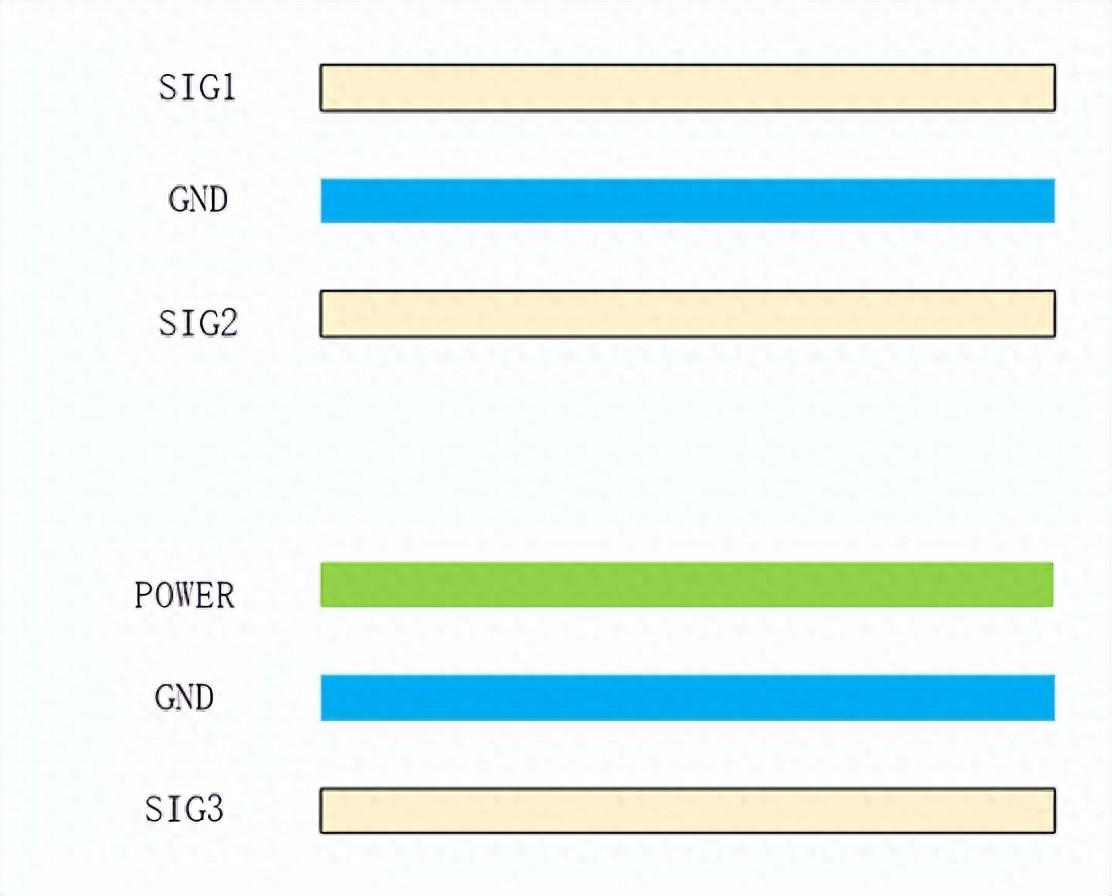
From a pure cost perspective, using only 1 GND layer + 1 power layer + 4 signal layers seems cheaper. However, two ground layers are strongly preferred for performance.
Core Reasons for Two Ground Layers
- Ground serves as the signal return path and provides shielding between layers.
- Two ground layers deliver better signal quality, stability, and EMC performance.
- Multiple ground planes improve heat conduction for high-power components.
Analysis of Two Common Single‑GND Stackups
Stackup 1 (Poor Performance)
SIG1 – GND – SIG2 – SIG3 – POWER – SIG4
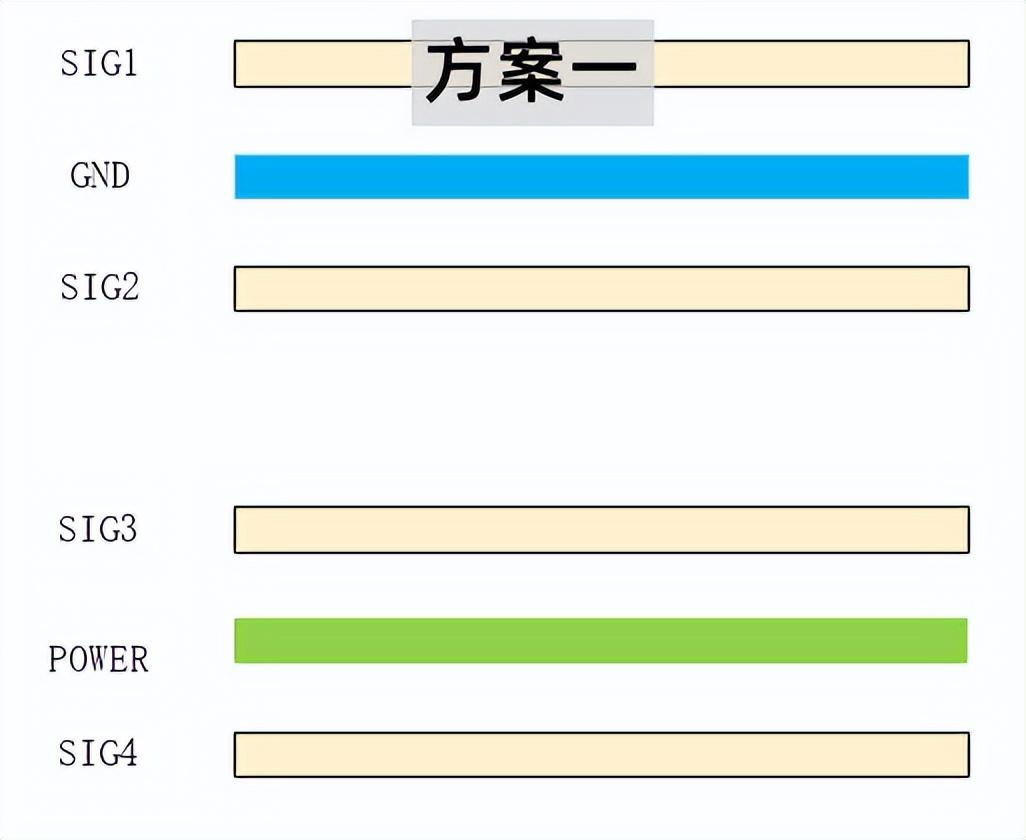
Problems:
- Power layer is far from ground, separated by two signal layers.
- Poor power–ground coupling → high impedance, noise, and bad heat dissipation.
- Degraded signal integrity and reliability.
Stackup 2 (Better Power but Bad Signals)
SIG1 – SIG2 – GND – POWER – SIG3 – SIG4
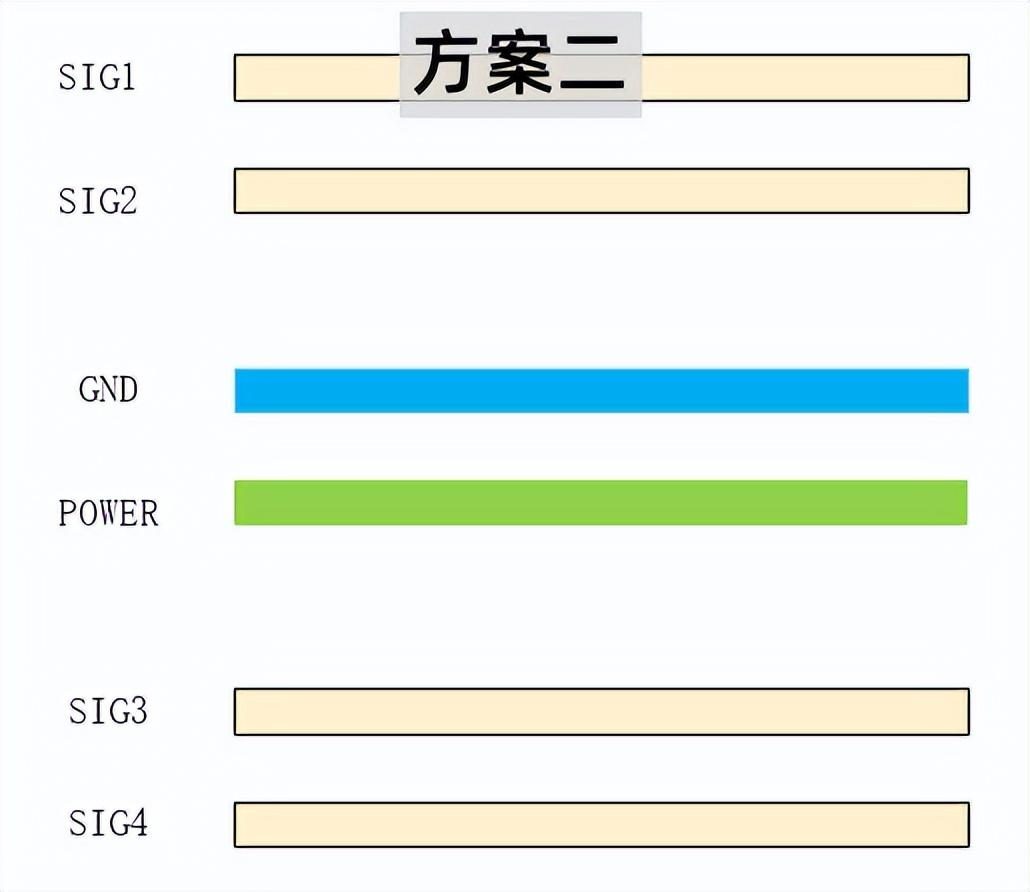
Advantage:
- Power and ground are adjacent → good coupling, low impedance.
Critical flaws:
- Signal layers are adjacent (SIG1–SIG2, SIG3–SIG4).
- Severe crosstalk and radiation between signals.
- Much harder routing and lower stability.
Optimal 6‑Layer Stackup (Two Ground Planes)
SIG1 – GND – SIG2 – POWER – GND – SIG3
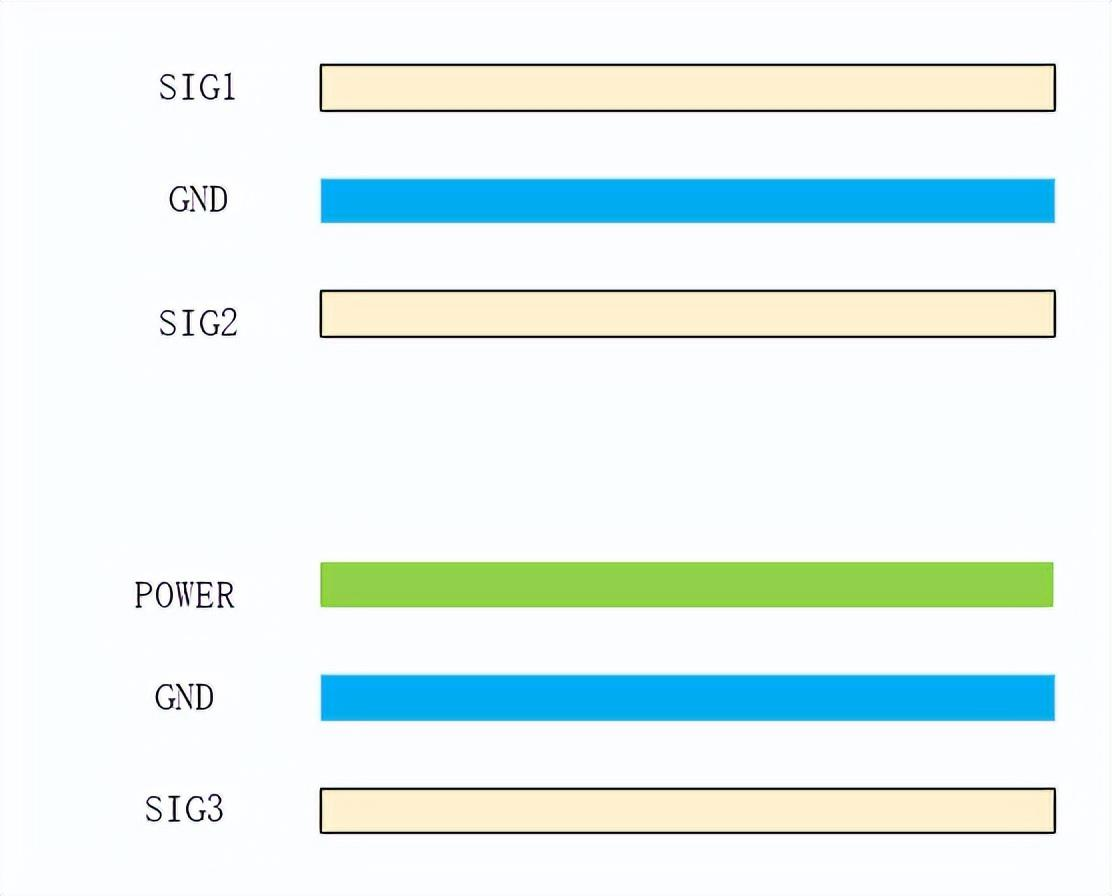
Benefits:
- Every signal and power layer is adjacent to ground.
- Excellent shielding, low crosstalk, and stable impedance.
- Priority routing order: SIG2 → SIG3 → SIG1.
- Better EMI suppression, heat dissipation, and design margin.
Conclusion
Two ground planes are strongly recommended for
6‑layer PCBs to ensure
signal integrity, EMC, and thermal performance.
Only choose a single‑ground design if
cost is the absolute priority, and compensate with heavy decoupling and careful routing.
About Maxipcb
Maxipcb empowers innovators to turn cutting-edge technologies into reality.
We offer one-stop solutions for design, simulation, testing, PCB manufacturing, component procurement and SMT assembly, enabling efficient development, rapid deployment and risk control across the full product lifecycle.Serving the world in communications, industrial automation, aerospace, automotive, semiconductor and beyond, we build a safer, more connected future together.

