What is aluminum-based copper clad laminate?
PCB is called printedcircuit board, and aluminum-based copper clad laminate is a kind of PCB. Aluminum-based copper clad laminate is a kind of metal-based copper clad laminate with good heat dissipation function. Generally, a single panel consists of three layers, namely, a circuit layer (copper foil), an insulating layer and a metal base layer. For high-end use, it is also designed as double panels, and the structure is circuit layer, insulating layer, aluminum base, insulating layer and circuit layer. Very few applications are multi-layer boards, which can be made of ordinary multi-layer boards, insulating layers and aluminum bases.
Types of aluminum-based copper clad laminate
1. Single-sided aluminum-based copper clad laminate 2. Aluminum-based copper clad laminate for double-sided lines
There are two layers of conductive pattern layers superimposed with insulating material plus aluminum plate (substrate).

Single-sided double-layer plate

Double plate
3. Multilayer printed aluminum-based circuit boardIt consists of three or more conductive pattern layers and insulating materials plus aluminum plate. A printed circuit board made by alternately laminating and bonding (substrates).
 Working principle of aluminum-based copper clad laminate
Aluminum-based copper clad laminate is mainly composed of aluminum substrate, insulating layer and copper foil, which are closely combined by bonding or pressing.
Copper foil has excellent conductivity and is the main conductive layer of the circuit. When the current passes through the copper clad laminate, the current mainly flows in the copper foil layer, thus realizing the conductive function of the circuit.The main function of the insulating layer is to isolate the copper foil conductive layer from the aluminum substrate, prevent current leakage and short circuit, and ensure the electrical safety of the circuit. At the same time, it needs to have certain thermal conductivity, which can quickly conduct the heat generated by the copper foil layer to the aluminum substrate, and then the aluminum substrate emits it to the surrounding environment, thus achieving efficient heat dissipation. Aluminum-based copper clad laminate is mainly used in electronic equipment with high power density, such as LED lighting and power amplifier. Its working principle is to realize the rapid conduction of the circuit through the copper foil layer, and at the same time, to use the high thermal conductivity of the aluminum substrate to quickly dissipate heat, thus ensuring the stability and reliability of electronic equipment in high power operation.
Thermal conductivity of aluminum-based copper clad laminateThe heat dissipation performance of aluminum-based copper clad laminate will directly affect the subsequent service life of electronic equipment. How to effectively evaluate and improve the heat dissipation performance of aluminum-based copper clad laminate has become the improvement direction of many manufacturers. We know that aluminum-based copper clad laminate is mainly composed of copper foil, aluminum substrate and insulating layer. Because of copper foil and aluminum substrate, the thermal conductivity of insulating layer also determines the thermal conductivity of aluminum-based copper clad laminate.
The thermal conductivity of aluminum-based copper clad laminate is divided into overall thermal conductivity and insulation thermal conductivity. Commonly known as 1W, 2W or 3W aluminum-based copper clad laminate in the industry, all refer to the thermal conductivity of insulating layer, so the thermal conductivity of insulating layer is often used to characterize the model and thermal conductivity of aluminum-based copper clad laminate.At present, the steady heat flow method is generally used to test the thermal conductivity of aluminum-based copper clad laminate insulation layer in the industry, and the corresponding standard is ASTM D 5470-17. The steady-state heat flow method is based on testing the ideal heat conduction of samples with uniform thickness in two parallel isothermal interfaces. Different temperatures are applied between the two contact interfaces of the sample, so that the temperature gradient is formed on the upper and lower surfaces of the sample, and the heat flux is urged to pass through the test surface of the sample vertically without heat diffusion on the side. Test method: a square sample with a certain thickness is inserted between two parallel surfaces with isothermal heat, and a thermal gradient is applied to the sample through the temperature difference between the two contact surfaces, so that heat flow passes through the sample, and the heat flow passes through the test surface vertically and evenly, while ensuring no lateral heat transmission. The equipment calculates the thermal resistance and thermal conductivity of the sample by detecting the heat flux flowing through the sample and the temperatures of the hot and cold end faces.
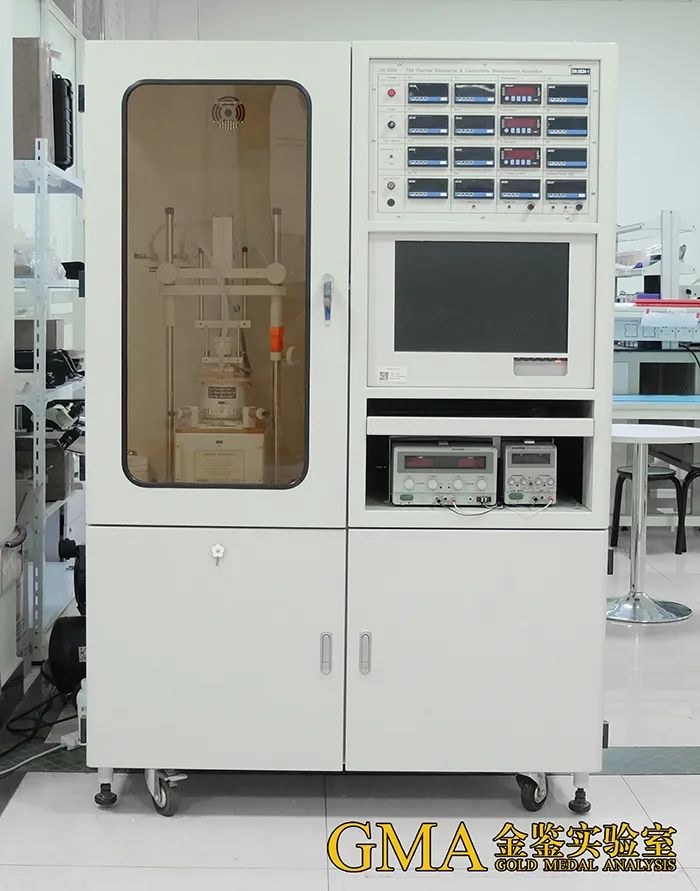
Device for measuring thermal resistance and thermal conductivity of materials
Production process of aluminum-based copper clad laminate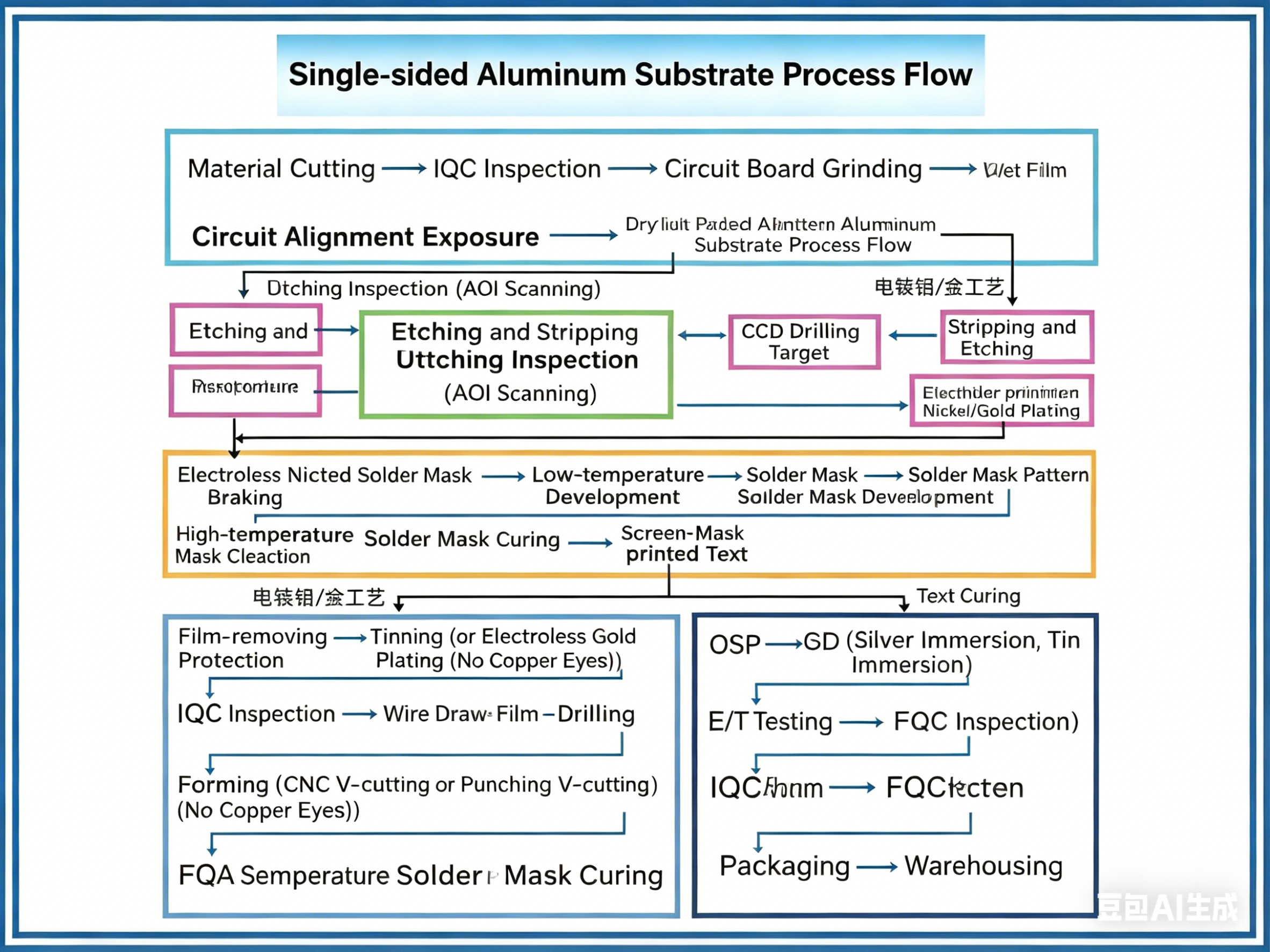 summary
Aluminum-based copper clad laminate has been widely used in the electronic field because of its excellent heat dissipation, electrical and mechanical properties. With the continuous progress of technology, its performance and application scope will be further expanded, and it is expected to play an important role in more fields.
About Maxipcb
Maxipcb empowers innovators to turn cutting-edge technologies into reality.
We offer one-stop solutions for design, simulation, testing, PCB manufacturing, component procurement and SMT assembly, enabling efficient development, rapid deployment and risk control across the full product lifecycle.
Serving the world in communications, industrial automation, aerospace, automotive, semiconductor and beyond, we build a safer, more connected future together.

